Dr. Charles Bower
Partners in CrimeDr. Charles Bower is introduced as a Hampstead doctor seeking help after a pair of false emergency calls coincides with the apparent ransacking of his private papers. The case makes him a convincing client of the International Detective Agency, but Inspector Dymchurch later reveals that “Carl Bauer” was a false identity in a test of the agency: Bower’s alarming story was staged to discover whether its new Mr. Blunt was a spy.
The Alleged Intrusions
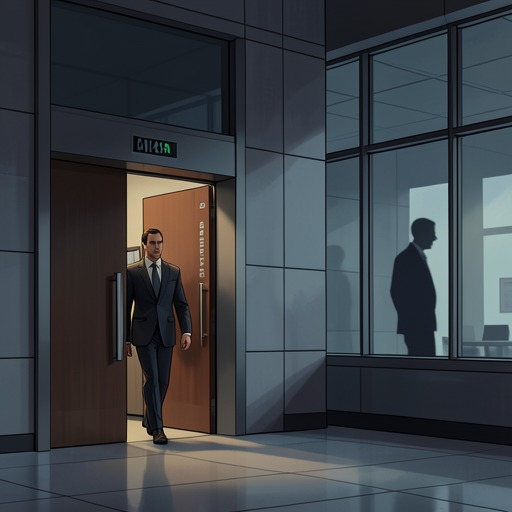
Bower says that twice in one week he received telephone summonses to urgent cases, only to find each summons false. After the second call, he returned home to find private papers displaced and disarranged. A thorough search led him to conclude that his desk had been ransacked and its contents hastily put back; he believed the same thing had happened after the first summons. The sequence gives the supposed intruder both a reason to draw him away and an opportunity to search his papers.
The account points inward rather than toward a forced entry. Bower says he can find no sign that anyone entered the house forcibly from outside, and describes three servants who had served him faithfully, though he allows that he cannot be entirely certain of them. He also lives with his nephews, Bertram and Henry. He characterizes Henry as industrious and dependable, while calling Bertram wild, extravagant, and persistently idle. Tommy responds by reversing the suspicion Bower appears to invite: rather than suspecting Bertram, he says he suspects Henry. The exchange turns the client’s apparently straightforward report into a test of how the agency handles a plausible but potentially misleading case.
A Client Manufactured for a Test
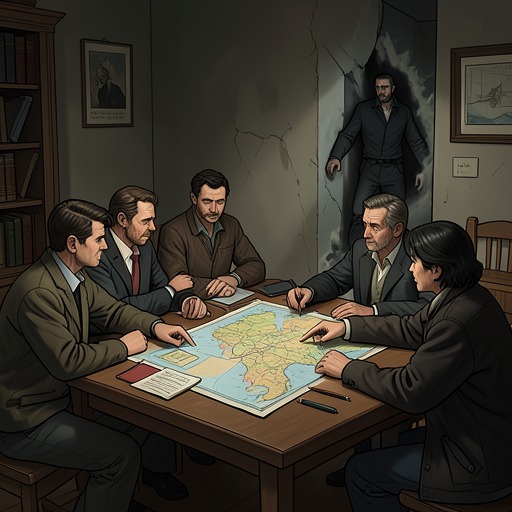
The account’s reliability is overturned when Inspector Dymchurch explains that he suspected the International Detective Agency might not be what it claimed. To investigate, he sent an associate under the name Carl Bauer, instructing him to behave suspiciously and present an improbable story. Dymchurch then entered the scene using the name Inspector Marriot to gain confidence. In this explanation, Bower’s supposed burglary and family suspicions belong not to a genuine investigation but to a performance designed to probe the agency.
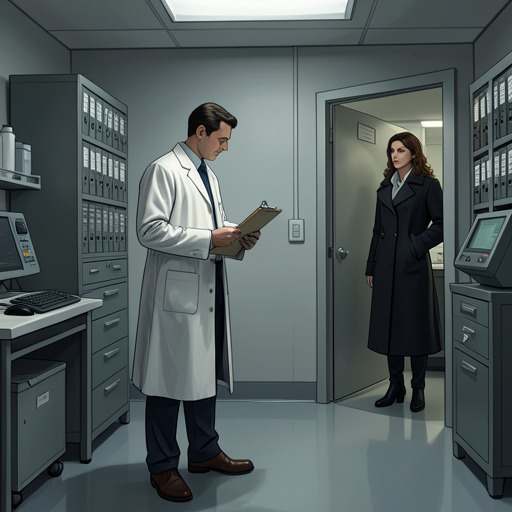
Bower’s client persona depended on the agency’s own performance. The office had been furnished to make Mr. Blunt appear established, with empty, artistically labeled files, a telephone, and rehearsed telephone effects; Albert had instructions too. Dymchurch’s account makes the encounter a contest between staged identities: the agency presents an experienced detective, while the false client presents a suspicious case. Bower’s story is convincing enough to provoke an investigation, but the person behind it is not the Hampstead doctor he claims to be.
The Disguise Exposed
The revelation is reinforced by Dymchurch’s abrupt change in appearance and manner. Tommy had known him as a typical Englishman; now the man before him appears unmistakably foreign, though he speaks English perfectly without an accent. This contrast accompanies the disclosure that “Inspector Marriot” was another assumed identity, just as “Carl Bauer” concealed the associate’s role in the test. The case thus depends on appearances that seem stable until a new explanation recasts them.
Bower has no further independent role in the account provided. His importance lies in the false trail he supplies: a doctor’s urgent calls, papers disturbed at a desk, and a household divided between a disreputable nephew and a supposedly good one. Once Dymchurch explains the deception, those details cease to establish a real crime and instead reveal how an invented client and an assumed police identity were used to test the agency’s trustworthiness.